Backing Africa's Underserved Majority: The Case for Growth Capital with Impact
The access gap as an investment opportunity. Across Sub-Saharan Africa, hundreds of millions of people remain underserved by essential services - mobile connectivity, financial products, clean energy, nutritious food, and affordable healthcare. This is often framed as a development problem. At Metier, we see it differently: it is also one of the most compelling investment opportunities on the continent.
Growth capital - patient, flexible equity deployed into mid-market businesses with strong management teams and scalable models - is uniquely positioned to address this gap. Not by accepting sub-commercial returns, but by backing businesses that are commercially competitive precisely because they serve markets that larger incumbents have overlooked.
This is a core premise behind Metier's Capital Growth practice, and the investment thesis underpinning MCGF III, our third growth equity fund focused on Sub-Saharan Africa.
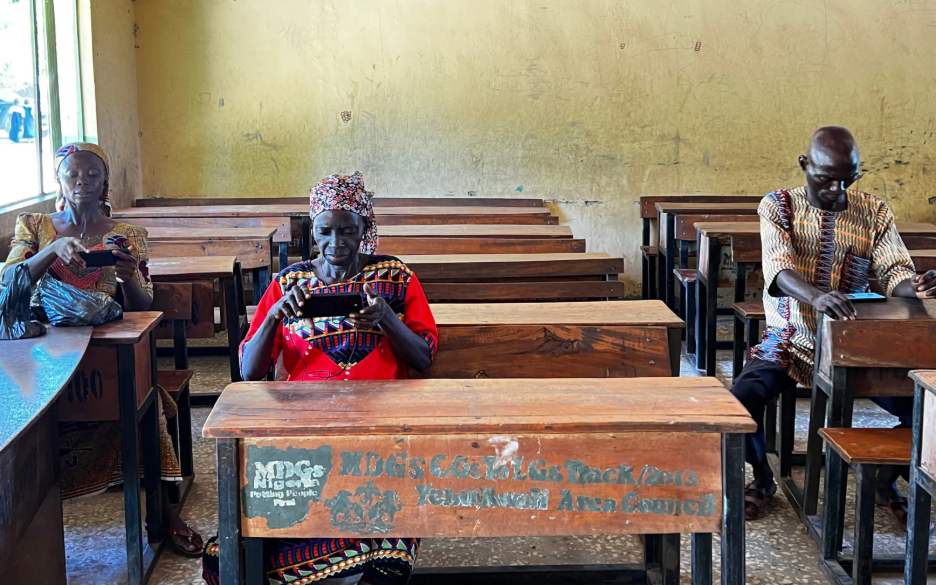
Rethinking the impact-return trade-off
A persistent misconception in private capital is that impact investing requires a return concession. The businesses in our portfolio challenge this assumption directly.
"The communities we invest for - rural households without mobile coverage, micro-entrepreneurs who need asset financing, families spending a large share of income on food staples - represent large, underserved demand pools."
The communities we invest for - rural households without mobile coverage, micro-entrepreneurs who need asset financing, families spending a large share of income on food staples - represent large, underserved demand pools. Businesses that reach these communities efficiently can achieve strong unit economics, because of the limited competition and customers who, once served, demonstrate high loyalty and repeat usage.
Metier's investment mandate deliberately targets businesses with annuity-style, recurring revenue models. The result is a portfolio that is both defensively positioned and cash-generative - delivering financial resilience alongside measurable development outcomes. Across MCGF III's portfolio companies, the numbers tell a compelling story. Africa Mobile Networks (AMN) now connects 15.3 million people across rural Africa. Watu has reached over 3.1 million active clients, including more than 1.25 million women, through asset financing. Blinkwater produces up to 300,000 tonnes of maize meal annually, reaching over 1.6 million households. Vivica supports over 4,400 businesses with digital tools. Stage Zero has installed solar systems at over 2,000 homes and businesses. The portfolio collectively employs over 5,100 individuals, contributes USD 60.3 million in salaries and wages, and spends approximately USD 166 million with local suppliers - with 85% of capital deployed to businesses meeting the 2X Challenge criteria for advancing opportunities for women.
Rural Connectivity: Africa Mobile Networks (AMN)
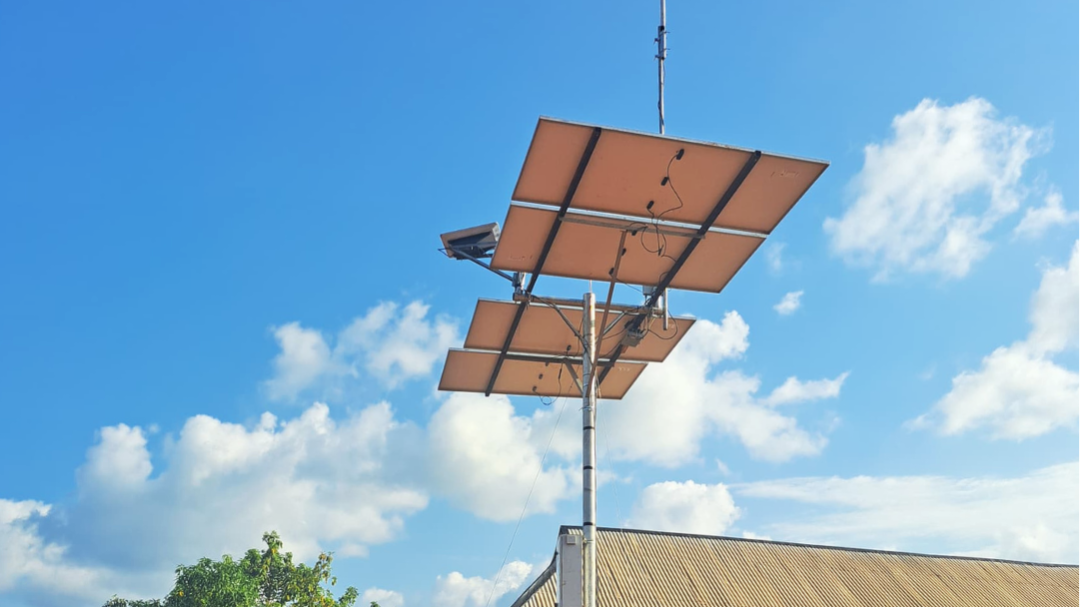
AMN is a clear illustration of our approach. AMN builds, owns and operates mobile network base stations across 10 Sub-Saharan African countries, serving tier-1 mobile operators in rural and ultra-rural areas that larger tower companies have not found commercially viable to reach.
“The business demonstrates that connecting the previously unconnected can be done profitably and at scale.”
The model works because AMN has engineered out the cost barriers that historically made rural connectivity uneconomical. Its towers consume approximately 40 times less power than conventional infrastructure, are fully solar-powered, and are designed for low-maintenance operation in remote settings. As of year-end 2025, AMN had deployed over 5,000 towers, delivering mobile coverage to approximately 15.3 million people across 10 countries. Each new tower creates approximately four indirect jobs within surrounding communities, through roles such as site supervisors and mobile money resellers.
The investment is performing strongly. Revenue and margins have grown strongly since the investment, reflecting the compounding benefit of a growing tower base of over 5,000 active sites. The network also supported 6.1 million subscribers during 2025, with total data usage reaching 94.7 terabytes - indicating that connectivity is translating into active participation in digital services. The business demonstrates that connecting the previously unconnected can be done profitably and at scale.
Read the Metier x Africa Mobile Networks Case Study on investment, growth and impact >>
Financial Inclusion and Digital Access: Watu
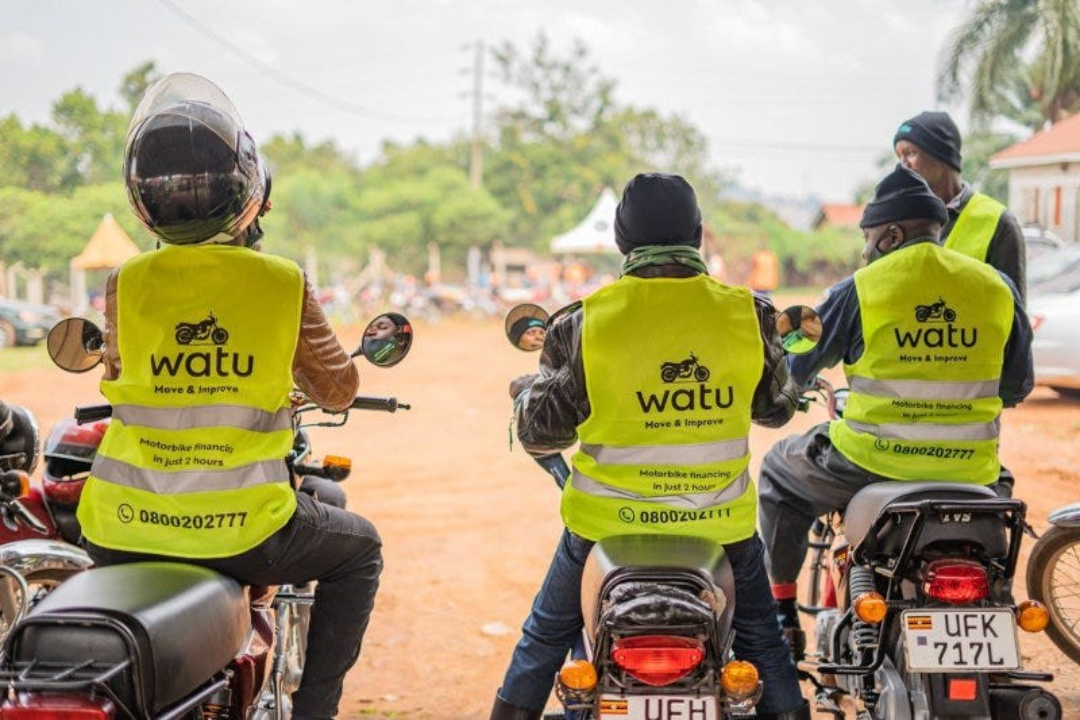
Mobile connectivity is not an end in and of itself. For rural communities across Sub-Saharan Africa, it is the gateway to financial services. This intersection is central to the investment thesis behind Watu, our asset financing portfolio company operating across Sub-Saharan Africa with over 3.1 million active clients, including more than 1.25 million active female clients.
Watu finances smartphones and mobility assets - motorcycles and three-wheelers - enabling economic participation for individuals who would otherwise be excluded from formal financial systems. An independent survey carried out with over 2,500 of its clients across Kenya, Uganda and Tanzania quantified what this access means in practice: more than 31% of Watu smartphone customers reported increased income, over 54% of those reported income increases of more than 10%. More than 45% of respondents reported enhanced financial stability, and over 59% reported overall improvements in quality of life.
These outcomes are not incidental to the investment case - they are a direct consequence of the business model. Watu's annuity-style revenue, generated through recurring asset financing contracts, is structurally linked to the economic empowerment of its clients.
Food Security and Farmer Empowerment: Blinkwater Meule
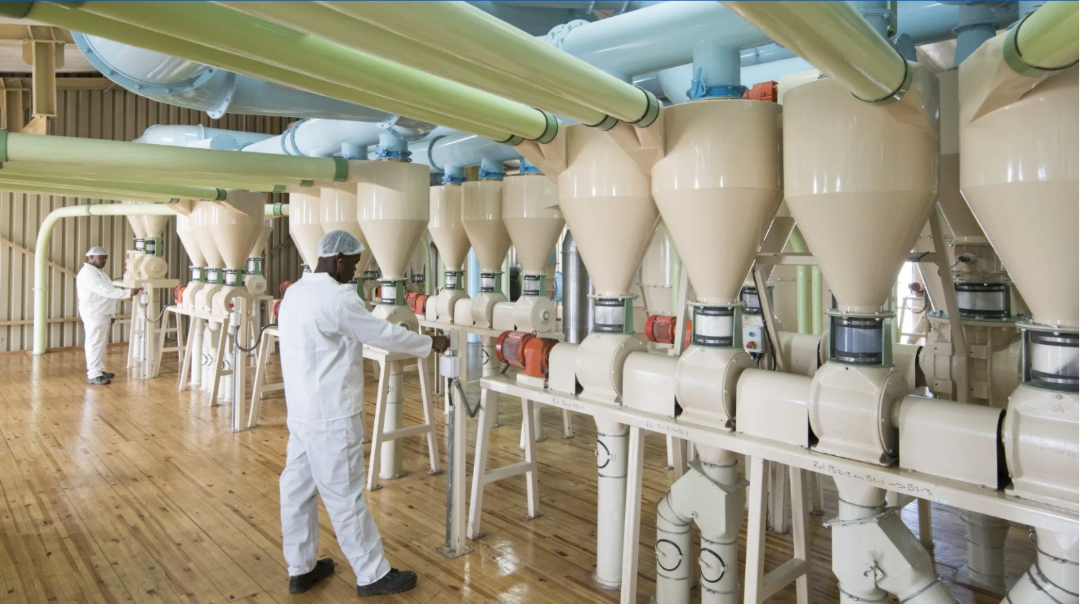
The thesis extends beyond connectivity and financial inclusion. Blinkwater Meule, our South African agri-processing investment, is one of the largest privately-owned maize mills in the country, producing high-quality maize meal for millions of consumers predominantly in Limpopo and Mpumalanga - provinces where a 2023 survey found that 52% of rural households experience food insecurity.
“The model is commercially efficient and structurally embedded in the communities it serves.”
What sets Blinkwater apart is its unique barter model: the company partners with over 5,000 subsistence farmers annually, allowing each to trade raw maize in exchange for maize meal, cash, seeds, or fertiliser. This gives subsistence farmers stable access to market infrastructure at approximately 60% lower cost than traditional milling, while providing Blinkwater with a reliable local supply. The model is commercially efficient and structurally embedded in the communities it serves.
Blinkwater employs over 700 people, 50% of whom are women - a 2X Challenge eligible business - across its milling operations and a distribution network of over 340 spaza stores in informal settlements across Limpopo and Mpumalanga. The company has an installed production capacity of approximately 300,000 tonnes annually, and positively impacts over 1.6 million households. Its 2 MW solar installation contributes to ongoing emissions savings, and 100% of processed maize is utilised - with byproduct hominy chop sold as animal feed, supporting circular agriculture. In 2025, solid waste recycled reached 1.7 million kg, reflecting continued progress on resource efficiency.
Active ownership as a value creation lever
Capital alone does not create impact. Metier's approach is rooted in active ownership - working with management teams on governance, ESG integration, stakeholder engagement, and operational improvement.
At AMN, this has included reinforcing health and safety protocols across the tower installation lifecycle and supporting local employment programmes, with community members trained and hired for installation and maintenance roles. At Watu, Metier has supported the development of ESG monitoring frameworks and governance structures that strengthen the business's accountability to its 3.1 million active clients, and initiated a targeted technical assistance programme focused on climate risk assessment, resource efficiency, and ESG systems integration. At Blinkwater, Metier is working alongside the founding family to build operational capabilities, expand milling capacity, and deepen the company's community engagement programmes - including farmer training workshops on sustainable agricultural practices and financial literacy.
Across the portfolio, we apply a consistent ESG monitoring framework aligned to IFC Performance Standards and TCFD, ensuring that development outcomes are tracked alongside financial performance.
The broader implication
For institutional investors seeking to mobilise capital into Africa, the MCGF III portfolio offers a replicable model: deploy into mid-market businesses serving essential needs, demand real commercial viability, and allow the development impact to follow structurally from the business model and its commercial sustainability rather than as an add-on.
The businesses that will drive Africa's next decade of growth are not yet large enough for the biggest global PE funds and too complex for pure-play DFI investment. They sit in exactly the space that mid-market growth capital is designed to serve.
“At Metier, backing these businesses - connecting the unconnected, financing the underfinanced, and feeding the underserved - is not a compromise between returns and impact. It is the investment thesis itself.”